

Volunteering at Local Communities
Look what We've already done!
First Stop
Volunteering at Neurology Department in Zengcheng Campus of the Guangzhou Women and Children's Medical Center


🌄 Take a look of various scenes in the hospital, including a piano in the center of the hospital, neurology department, children's playroom, paintings in the gallery, and natural landscape around the hospital.


What did we do at the First Stop?
1. Facilitate Outpatient Consultation
In outpatient room of neurology department, the neurologist needs to see various patients with neurological problems such as tics, encephalitis, concussion, etc. We helped the neurologist ask basic symptoms of the patients and recorded them. Then, the neurologist would reassure these symptoms and provided corresponding examinations and medications. In this way, what we did largely facilitated the efficiency of outpatient consultation.
2. Helping children complete Autism and Attention Assessment
The children's hospital in Zengcheng includes many children with neurodevelopmental disorders—including the Autism Spectrum Disorder (ASD) and Attention-Deficit/Hyperactivity Disorder (ADHD). These children faced symptoms such as repetitive movements and difficulties in concentrating. In order to evaluate their symptoms, we facilitated children with these two disorders complete an evaluation test. In this way, doctors can provide a more individualized and proper intervention actions.


3. Assisting in Earlier Intervention for children with Autism Spectrum Disorder
The hospital provides a course instructed by trained therapists to help children with ASD ameliorate their ASD's symptoms such as limited eye contact and socialization. The course is performed in a specific classroom with whiteboard, toys, and other equipment. Since we are high school students and are not qualified to engage in the earlier intervention for ASD, we tidied up the classroom after every course. We did this because we hope that the therapists can focus more on intervention-related activities than logistics works. In this way, the overall efficacy of intervention could be improved.


4. Assisting Free Clinic for people with Osteogenesis Imperfecta
Osteogenesis Imperfecta (OI) is a skeletal rare disease. People with OI suffer especially from bone fragility. In the 9th China-Dolls Conference for People with Osteogenesis Imperfecta, there are doctors from different disciplines coming together—Orthopedics, Rehabilitation Medicine, Endocrinology, and Otolaryngology. In this multidisciplinary free clinic, we recorded patients' primary symptoms, and based on their major symptoms, we assigned them to corresponding disciplines, enabling patients to get the best health assessment and individualized medical advices.

Left: Raymond Shi, the Founder of Rare not Alone Organization
Second Stop
Volunteering at Respiratory Pediatrics Department in the Datansha Campus of the First Affiliated Hospital of Guangzhou Medical University
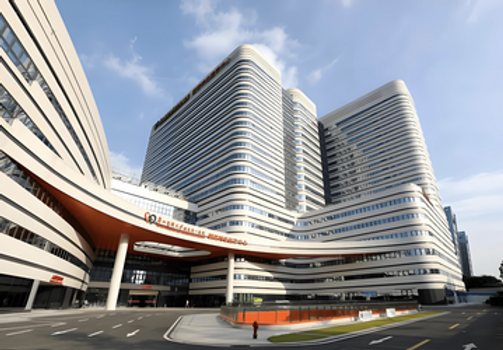

🌄 Come and see what the hospital where we volunteered looks like!


What did we do at the Second Stop?
1. Facilitating Outpatient Consultation
We assist doctors when they see outpatients. Specifically, we help doctors maintain order in consultation room, write examination order and sites, and record patients' symptoms and examination report for doctors' later needs.


2. Clinical Diagnosis Discussion
We participate in clinical diagnosis discussion, diagnosing common respiratory diseases. These include upper respiratory tract infections such as common cold, pharyngitis, tonsillitis, sinusitis; lower respiratory tract infections such as pneumonia, bronchitis, RSV, and bronchiolitis; asthma; allergic rhinitis; chronic cough; pertussis; and tuberculosis. These also include some rare respiratory diseases such as cystic fibrosis, primary ciliary dyskinesia, and apha-1 antitrypsin deficiency. We do this, hoping to provide additional perspectives to clinic doctors when they discuss the diagnosis of inpatients.
3. Inpatient Care Facilitation
In inpatient ward, doctors are often not able to stay in the ward consistently since they have other works such as seeing outpatients and online meetings. For this reason, we stay at inpatient wards and assist nurses to teach patients use nebulization and nasal spray medication in order to learn more about patients' conditions. As such, we can better explain patients' conditions if doctors need such information for diagnosis or prescribing treatments.
4. Ward Round
We partake in ward round, assisting doctors by asking patients' the medical status and symptom improvement and explaining to the doctors.
